










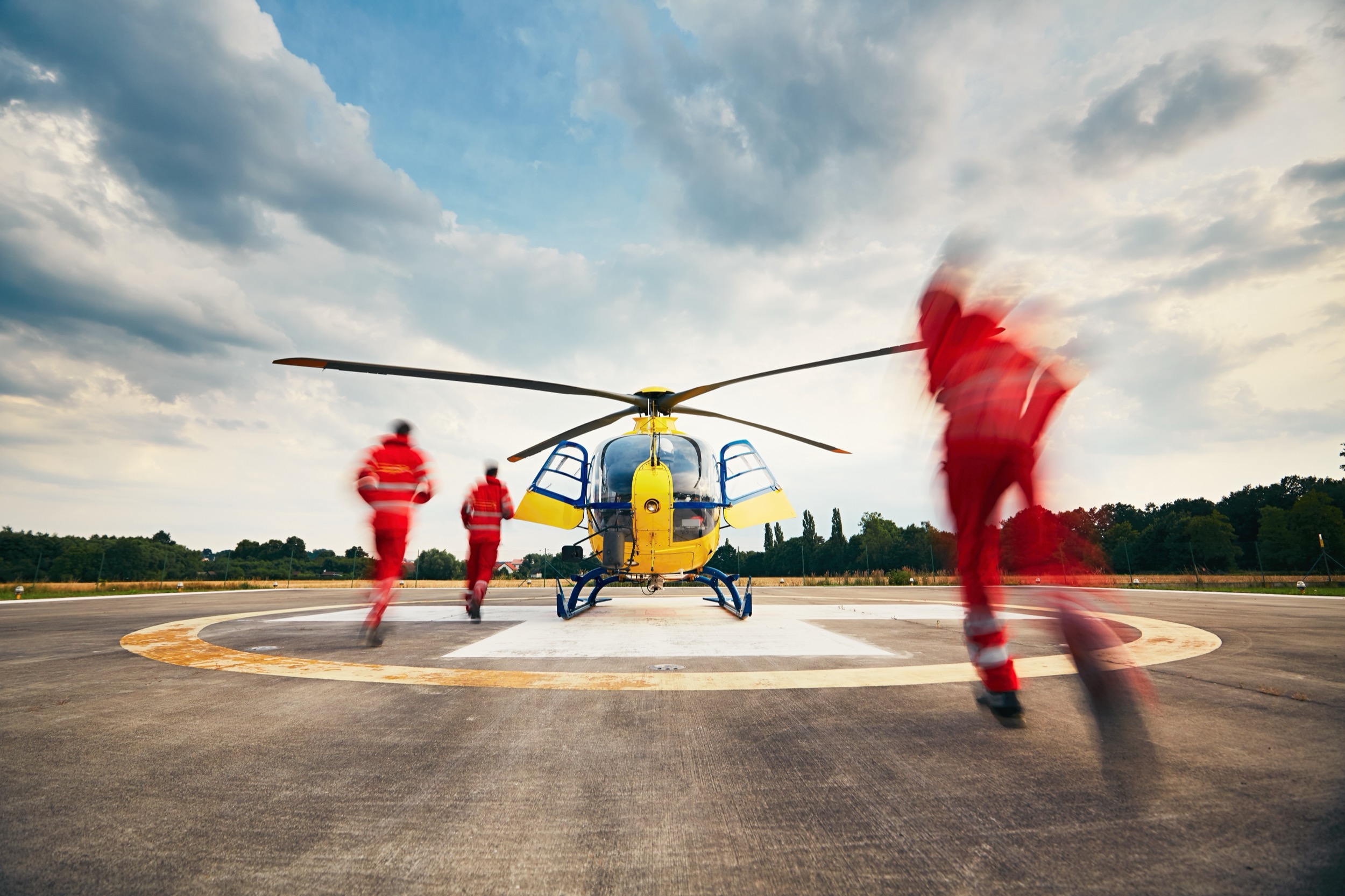
Medical treatment can become far more complicated when the right treatment is hundreds or thousands of kilometres away. Whether someone suffers a serious injury overseas, becomes critically ill at a remote worksite or needs specialist treatment in another city, a standard flight or lengthy road transfer may not be a suitable option.
An air ambulance or medical evacuation charter provides dedicated air transport for patients who need medical supervision or treatment during their journey. These flights use appropriately equipped aircraft with qualified medical professionals on board, such as doctors, nurses or paramedics, to provide dedicated care.
At Air Charter Network, we source suitable aircraft and coordinate flights with medically certified operators and medical partners who deliver the clinical care. From the initial enquiry through to arrival and hospital handover, every arrangement involves multiple moving parts that need to work together.
But how does a medical evacuation charter work? What is an air ambulance? We cover the process, the aircraft and medical support involved in medical air transfers as well as the factors that influence costs and what to consider when arranging a flight for yourself or someone in your care.
If someone is in immediate danger, call 000 first. A charter follows clinical assessment; it does not replace emergency response.
What Are Air Ambulance And Medical Evacuation Charters?
Air ambulance and medical evacuation charters are designed to transport patients who cannot safely travel by conventional means, such as hospital-to-hospital transfers or a carefully coordinated flight home from overseas.
Although the terms are often used interchangeably, they describe slightly different aspects of medical transport.
What Is An Air Ambulance?
An air ambulance is a helicopter or fixed-wing aircraft equipped to transport patients who require medical supervision or treatment during a flight.
Depending on the patient’s condition, the aircraft may carry a stretcher, oxygen supplies, patient monitoring equipment and other medical systems, alongside qualified healthcare professionals. The aircraft must provide sufficient space for the patient, medical equipment and crew to deliver the required care throughout the journey.
Some aircraft are permanently configured for medical transport, while others can be adapted for specific missions. The appropriate setup depends on the patient’s condition, the distance involved, and the level of medical support required.
What Does Medical Evacuation (Medevac) Mean?
Medical evacuation, or medevac, refers to transporting a patient from one location to another to access appropriate medical care. This could involve moving an injured worker from a remote site to a major hospital, transferring a patient between medical facilities or arranging an international flight for someone who needs specialist treatment.
The term covers a range of transport options, from helicopter transfers over short distances to long-range air ambulance flights across international borders. The choice depends on the urgency of the situation, the patient’s medical requirements and the availability of suitable treatment at the destination.
What Is Medical Repatriation?
Medical repatriation involves returning a patient to their home country or usual place of residence when their condition allows them to travel. It commonly follows an illness, accident or hospitalisation overseas, particularly when the patient still requires a stretcher, medical monitoring or professional assistance during the journey.
The key difference is the destination and purpose of the transfer. Medical evacuation moves a patient to appropriate medical care, while medical repatriation brings them home when it is medically appropriate to do so.
For example, a traveller injured in Bali might first be evacuated to a specialist hospital in Singapore for treatment. Once their condition is stable enough for the journey, a separate medical repatriation flight could bring them home to Sydney.
When Is A Medical Evacuation Charter Needed?
Not every medical emergency requires an air ambulance, and flying is not always the safest option. The decision to transfer a patient should be guided by their treating clinicians, who assess their medical stability, the care available locally and whether the benefits of moving them outweigh the risks.
- Serious illness or injury while travelling abroad: Hospitals vary enormously from country to country. A traveller with a complex fracture, a stroke or a serious infection may be in a facility that cannot offer the surgery, intensive care or rehabilitation they need. Where the treating doctors judge a move to be necessary, an air ambulance gets the patient to a hospital that can.
- Medical emergencies in remote locations: Islands, outback communities, offshore platforms and mine sites can be hours from the nearest hospital by road, and some have no road at all. An aircraft removes most of that distance, provided there is a suitable airport, airstrip or helipad. A ground ambulance still handles the first and last leg at each end.
- Transfers between hospitals for specialist treatment: A regional hospital may need to send a patient to a metropolitan centre for intensive care, specialist surgery or advanced diagnostics. The sending team confirms the patient is fit to travel before anything is booked, and the receiving hospital confirms it is ready to accept them.
- Returning home after hospitalisation overseas: A patient who no longer needs acute treatment may still be unable to sit upright for a long-haul flight, may need continuous oxygen, or may need monitoring in the air. Those needs rule out many commercial seats. Our air evacuations team also coordinates urgent movements out of areas affected by natural disasters or unrest, which is a different situation again.
How an air ambulance charter works
While every mission is different, medical charters require careful coordination between the patient, medical professionals, aviation operators and ground transport teams to ensure the journey meets the patient’s needs.
Step 1: Initial Enquiry and Patient Information
The process begins with a call or email from a patient, family member, hospital, insurer or medical assistance company. To establish the requirements, the coordination team gathers essential details, including the patient’s current location, intended destination, medical condition, treating doctor’s contact information and preferred timing.
Medical records and travel documents can help move arrangements forward, particularly for international transfers. If some information is unavailable at first, initial planning can often begin while the outstanding details are collected.
Step 2: Medical Assessment and Fitness to Fly
Before a flight can proceed, qualified medical professionals assess the patient’s condition, treatment requirements and fitness to travel. This determines the level of medical support needed during the journey, including the appropriate clinical team, equipment and patient monitoring.
In some cases, the assessment may identify a need for further treatment or stabilisation before departure. Patient safety remains central to the decision, and the transfer must be planned around the clinical team’s recommendations.
Step 3: Aircraft Selection and Medical Crew Planning
Once the medical requirements are understood, a suitable aircraft is sourced for the mission. The choice depends on several factors, including the distance, available runway facilities, cabin configuration, medical equipment requirements and whether accompanying passengers need to travel.
The onboard medical team is also selected according to the patient’s needs. Someone requiring ventilation and intensive monitoring, for example, will have different clinical requirements from a patient recovering from a stable fracture.
Matching the aircraft and medical support to the individual case helps ensure the proposed transport arrangements are appropriate for the journey.
Step 4: Flight Permissions, Logistics and Ground Transport
With the aircraft and medical arrangements established, the operational planning begins. This may involve flight planning, landing permissions, airport coordination and additional clearances for international transfers.
Ground transport must also be arranged at both ends of the journey. Ambulances coordinate the movement between the hospital and departure airport, then from the arrival airport to the receiving facility.
These arrangements are particularly important for international medical evacuations, where multiple providers and regulatory requirements may need to be coordinated. Delays can occur if permissions, airport access or receiving hospital arrangements are not confirmed in time.
Step 5: Patient Transfer and In-Flight Medical Care
On the day of departure, the patient is transported to the aircraft and transferred on board using the arrangements established during planning. The aircraft is configured to accommodate the patient, medical equipment and clinical team required for the flight.
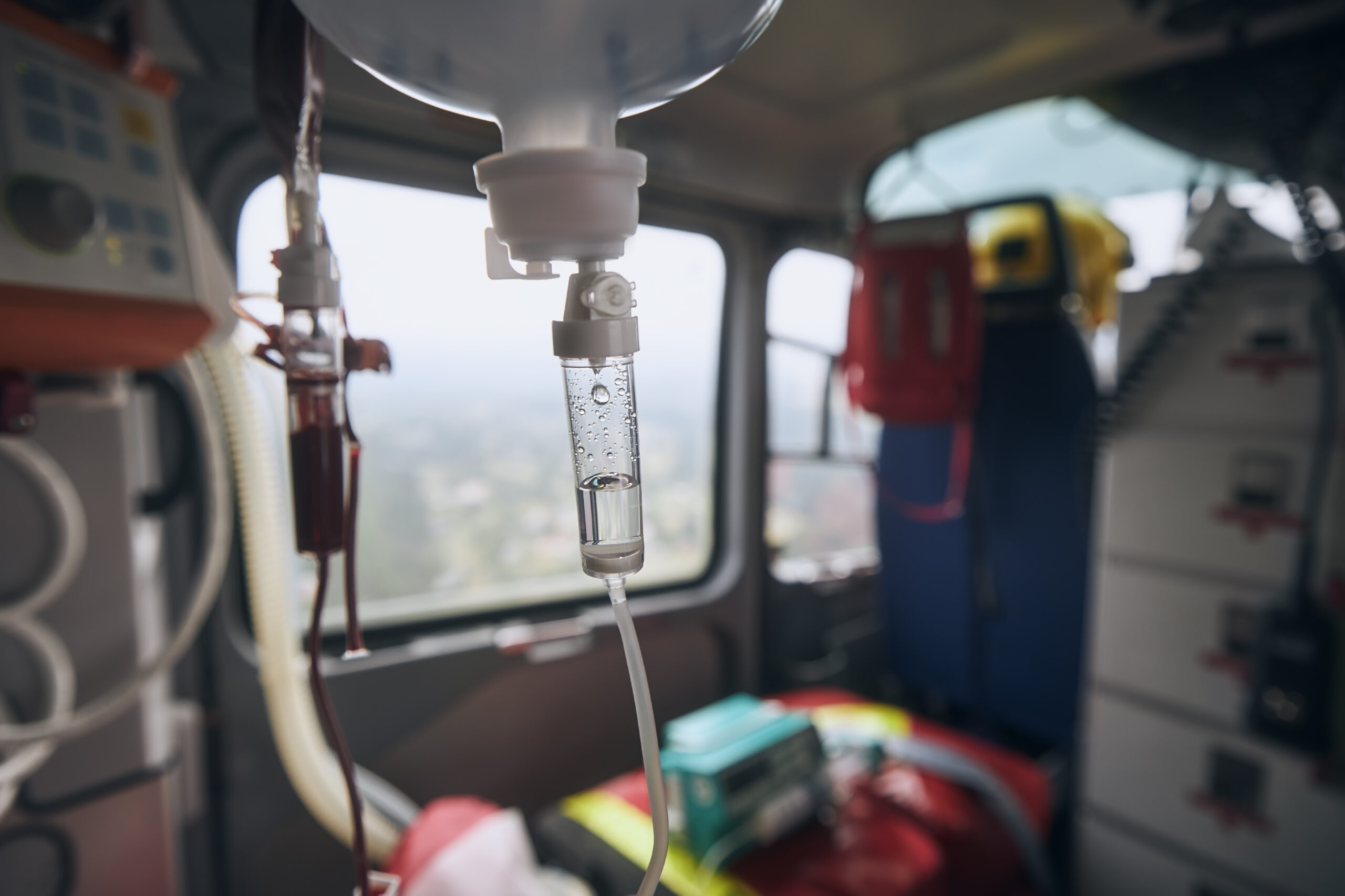
During the journey, the medical crew monitors the patient’s condition, administers prescribed treatments and responds to changes in their health. Depending on the patient’s requirements, onboard provisions may include oxygen, patient monitoring systems and other specialised equipment.
The level of care provided throughout the flight is determined by the patient’s condition and the clinical team’s assessment.
Step 6: Arrival, Hospital Handover and Continuity of Care
Landing marks the final stage of the flight, but the medical transfer is not complete until the patient reaches the receiving facility and care is formally handed over.
A ground ambulance transports the patient to the destination hospital, where the medical team receives relevant records, treatment information and observations from the journey. This information helps the receiving clinicians understand the patient’s condition and continue treatment without unnecessary gaps in care.
The receiving hospital must be prepared to accept the patient, with the appropriate staff and facilities available. Coordinating this handover is just as important as arranging the flight itself.
Which aircraft are used for medical evacuation?
| Aircraft type | Best suited to | Things to consider |
| Jets | Long-distance domestic and international transfers | Greater range and speed. Need a suitable runway, and cabin height and door size affect stretcher loading. |
| Turboprops | Regional and remote routes, shorter runways | Slower and shorter range than jets, but can use airstrips a jet cannot. Weather and cabin space matter. Turboprops are widely used for aeromedical work in Australia
|
| Helicopters | Short hops, accident sites and hospital-to-hospital transfers | No runway needed, but limited range, weather restrictions and the need for a safe landing site. |
However, the fastest aircraft is not always the right one. A jet is no use if the nearest suitable runway is 200 kilometres from the patient, and a turboprop that can land on a short strip may beat it door to door.

What Medical Care Is Available On Board?
Equipment depends on the aircraft and the patient. Common items include cardiac monitors, defibrillators, suction units, oxygen systems and infusion pumps. Where it is clinically needed, a mechanical ventilator can support patients who cannot breathe unassisted. Some missions can support intensive care, with advanced monitoring and continuous infusions, but the level of care varies by operator, crew and mission, so ask exactly what will be on board.
Who is on the medical flight team?
A flight team typically includes a doctor, a critical care nurse or a paramedic, chosen to match the patient’s needs. A patient on a ventilator needs a different team from one who is stable and needs observation. The roles are separate: the flight crew is responsible for flying the aircraft, and the medical crew is responsible for the patient.
How Safe is a Medical Flight?
Clinicians weigh the risks of moving a patient against the risks of staying where they are, and fitness to fly is assessed before departure.
Cabin pressure is an important consideration. Commercial aircraft are pressurised to around 8,000 feet, where the air holds about as much oxygen as breathing 15% oxygen at sea level, and gas trapped in the body expands as the aircraft climbs. Patients with heart or lung conditions may need extra oxygen or other precautions.
While no form of transport is risk-free, the medical team tailors precautions to each patient. If a patient’s condition changes mid-flight, the onboard team responds using its training and equipment. The plan can include diverting to the nearest suitable airport where that is clinically necessary and operationally possible. The treating doctor always makes the final call on fitness to fly.
How Much Does An Air Ambulance Charter Cost?
The cost of an air ambulance charter depends mainly on distance, aircraft type and the level of medical care required. Domestic flights typically start in the thousands of dollars, while long-haul international repatriations can pass $100,000.
Every flight is quoted individually, because no two missions share the same route, crew or equipment.
What affects the price
- Distance and flight time, including any fuel stops on long routes.
- Aircraft type, since a long-range jet costs more to operate than a turboprop.
- Patient condition and medical crew size. Intensive care support needs a larger clinical team and more equipment.
- Repositioning flights, where the aircraft flies empty to collect the patient or returns to base.
- Airport charges and landing permits, particularly overseas.
- Ground ambulances at both ends, and international coordination across several providers.
| Type of medical transport | Indicative cost (AUD) |
| Domestic helicopter air ambulance | $10,000-40,000+ |
| Domestic fixed-wing air ambulance | $5,000-25,000+ |
| International medical evacuation | Can exceed $100,000 |
| Long-haul international medical repatriation | Can exceed $100,000 |
| Complex international evacuation | Can exceed $100,000 |
These figures are indicative estimates only, not quotations. Actual costs depend on the individual mission and should be confirmed with the provider.
Is an air ambulance free in Australia?
Not necessarily. The cost of an air ambulance in Australia depends on the type of service, where the patient is located and the circumstances of the transfer. Some emergency medical transfers provided through publicly funded or state-based services may be covered, subject to eligibility and local arrangements. However, private air ambulance charters and international medical evacuations generally involve costs that must be covered by the patient, their insurer or another responsible organisation.
Does Travel Insurance Cover Air Ambulance Flights?
Travel insurance may cover air ambulance flights and medical repatriation, but coverage depends on the policy, the medical circumstances and the insurer’s approval requirements. Some policies cover medically necessary evacuation and repatriation, while others have specific limits, exclusions or conditions that must be met.
If you need medical transport overseas, contact your insurer or its emergency assistance team as early as possible. Many insurers require authorisation before a flight is arranged, and some may specify which providers can be used. Check your policy’s evacuation and repatriation benefits, coverage limits and exclusions before travelling.

How Quickly Can a Medical Evacuation Be Arranged?
Urgent missions can be organised quickly, but speed can depend on factors no provider fully controls:
- Aircraft and crew availability near the patient
- Medical clearance
- Weather
- Airport access and flight permissions International flights add landing approvals and overflight clearances, which can lengthen preparation.
A planned repatriation or hospital transfer works differently. It can be scheduled around a discharge date, which gives the team time to arrange the right aircraft and medical crew. That is why we avoid promising fixed departure times. Common causes of delay include:
- A change in the patient’s condition
- Unsuitable weather at departure, destination or along the route
- Regulatory requirements or permits that are not yet in place
- A receiving hospital that is not ready to accept the patient
- Incomplete passports, visas or medical documentation
Experienced coordinators work through these in parallel, and patient safety comes before the schedule.
What Does International Medical Evacuation Involve?
- Cross-Border Coordination and Flight Permissions: International flights may require landing permits, overflight clearances and additional aviation approvals. Ground ambulances, airport arrangements and hospital transfers must also be coordinated, often across different countries and time zones.
- Passports, Visas and Medical Documentation: Valid passports, visas and transit documents may be required for the patient and accompanying passengers. Medical records, treatment summaries and transfer notes must also be prepared so the receiving team can continue care.
- Medical Repatriation Between Countries: Repatriation depends on the patient’s fitness to fly and the receiving hospital’s capacity. Longer journeys may require aircraft or provider changes, while communication with family members and insurers adds another layer of coordination.
Getting The Right Medical Transport When It Matters Most
Arranging medical transport requires careful planning, experienced coordination and a clear understanding of the patient’s needs. The right solution must account for their condition, destination, urgency and the level of medical care required throughout the journey.
Air Charter Network sources suitable aircraft and coordinates medical charter flights with medically certified operators and medical partners who provide clinical care. Our team can help you understand the available options, coordinate the necessary arrangements and obtain a tailored quote for your transfer.
Need to arrange a medical evacuation or repatriation flight? Contact Air Charter Network to discuss your requirements and take the next step towards a coordinated medical transfer.